Building the Foundations for HPC
Most people encounter high-performance computing (HPC) through software, simulations, modelling, or increasingly, artificial intelligence workloads.
My route into HPC came from a very different place.
It started in electrical engineering environments where systems weren’t abstract constructs, but real, physical assets that had to operate reliably under demanding conditions.
Before I ever worked with UNIX systems or Linux clusters, I was working with power distribution, industrial systems, and environments where mistakes had immediate consequences.
That early exposure shaped a mindset that still applies today: systems must be understood end-to-end, failure must be anticipated, and reliability must be designed in from the beginning.
Engineering foundations: understanding systems from the ground up
 From the age of 14, I started down an engineering route, volunteering at a steam railway at weekends.
This gave me a sense of awe about how engineering can change the world.
I began my career at 16, joining a large UK infrastructure utility on a four-year engineering traineeship.
The work started in heavy industrial environments, including sewage and water treatment sites.
Alongside practical work, I studied mechanical and electrical engineering, as well as electronics.
What made this experience valuable wasn’t just the qualification; it was the exposure to how systems behave in real-world conditions.
Electrical systems had to be designed, maintained, and operated safely. Faults weren’t theoretical exercises; they had clear operational and safety implications.
Over time, I specialised more in the electrical side of engineering, progressing into high-voltage switching.
This introduced a deeper understanding of power generation and distribution, including systems using methane-derived energy.
At the time, this felt like a niche industrial application.
Much later, when working on modern AI infrastructure powered by alternative energy sources, it became clear just how relevant that knowledge was.
In HPC and AI environments today, power is often the primary constraint. It defines where systems can be deployed, how dense they can be, and how efficiently they can operate.
Those early lessons around power systems, load behaviour, and distribution directly underpin how I now approach infrastructure design.
Learning diagnostics: from vibration analysis to system troubleshooting
After qualifying as an electrician, I moved through a number of roles that broadened my engineering experience.
 One of the most impactful was working in vibration analysis across industrial sites, including oil and gas environments.
This was effectively an early introduction to systems monitoring and predictive maintenance.
By analysing vibration signatures in engines and compressors, we could identify faults before they resulted in failure.
It required a disciplined approach: collect data, identify patterns, and interpret behaviour accurately.
This same diagnostic mindset translates directly into HPC environments.
When a modern cluster fails or underperforms, the root cause is often not immediately obvious.
It may be a network bottleneck, a storage performance issue, a firmware inconsistency, or even a thermal constraint.
The ability to trace system behaviour back to underlying causes is essential.
One of the key lessons from this role was simple: never assume where the problem lies. Measure first, then decide.
The transition into computing: an unexpected entry point
My move into computing wasn’t planned.
It came through a series of contract roles, starting with electronics assembly and soldering work.
That led to building circuit boards and working on systems used in security and industrial applications.
The turning point came when I joined an organisation that also operated as a reseller and integrator of enterprise computing systems.
This introduced me to UNIX platforms, specifically IBM systems running AIX, and the broader process of building, configuring, and delivering infrastructure for customers.
This was a critical step. It shifted the focus from component-level work to system-level delivery.
Instead of working on individual devices, I was now involved in assembling complete systems, integrating hardware and software, and ensuring that what left the workshop would perform as expected in production environments.
Enterprise UNIX systems: building repeatable infrastructure
Working with AIX systems and enterprise hardware provided a strong foundation in structured infrastructure delivery.
These environments required consistency, documentation, and repeatable processes.
Systems were not built once; they were built multiple times, to defined standards, under time pressure, and with zero tolerance for inconsistency.
That introduced principles that remain fundamental today:
- Controlled build processes
- Standardised configurations
- Version management
- Pre-deployment validation
Over time, I moved into a leadership role within the integration function, coordinating builds and ensuring quality across deliveries.
This reinforced the idea that infrastructure is not just about technology; it’s about process and discipline.
Modern DevOps and infrastructure-as-code approaches formalise these ideas, but the core principles were already present: repeatability, traceability, and controlled change.
Broadening exposure: government and operational environments
Following this, I worked within a government environment supporting UNIX-based systems and infrastructure across departments.
This added another dimension: organisational complexity.
Large environments are not just technical challenges, they are operational ecosystems.
Systems must be maintained, supported, and aligned with organisational processes.
Communication, governance, and coordination become just as important as technical capability.
This is a lesson that remains highly relevant in modern HPC and AI deployments.
Even the most technically advanced system will struggle if operational processes are not clearly defined.
Entering HPC: clusters, Linux, and scale
The transition into HPC came through a role within a large oil and gas company.
Initially focused on UNIX systems, the environment also included early HPC clusters, including IBM SP systems.
At the time, the industry was beginning to shift. Proprietary systems were expensive, and Linux was becoming a viable alternative.
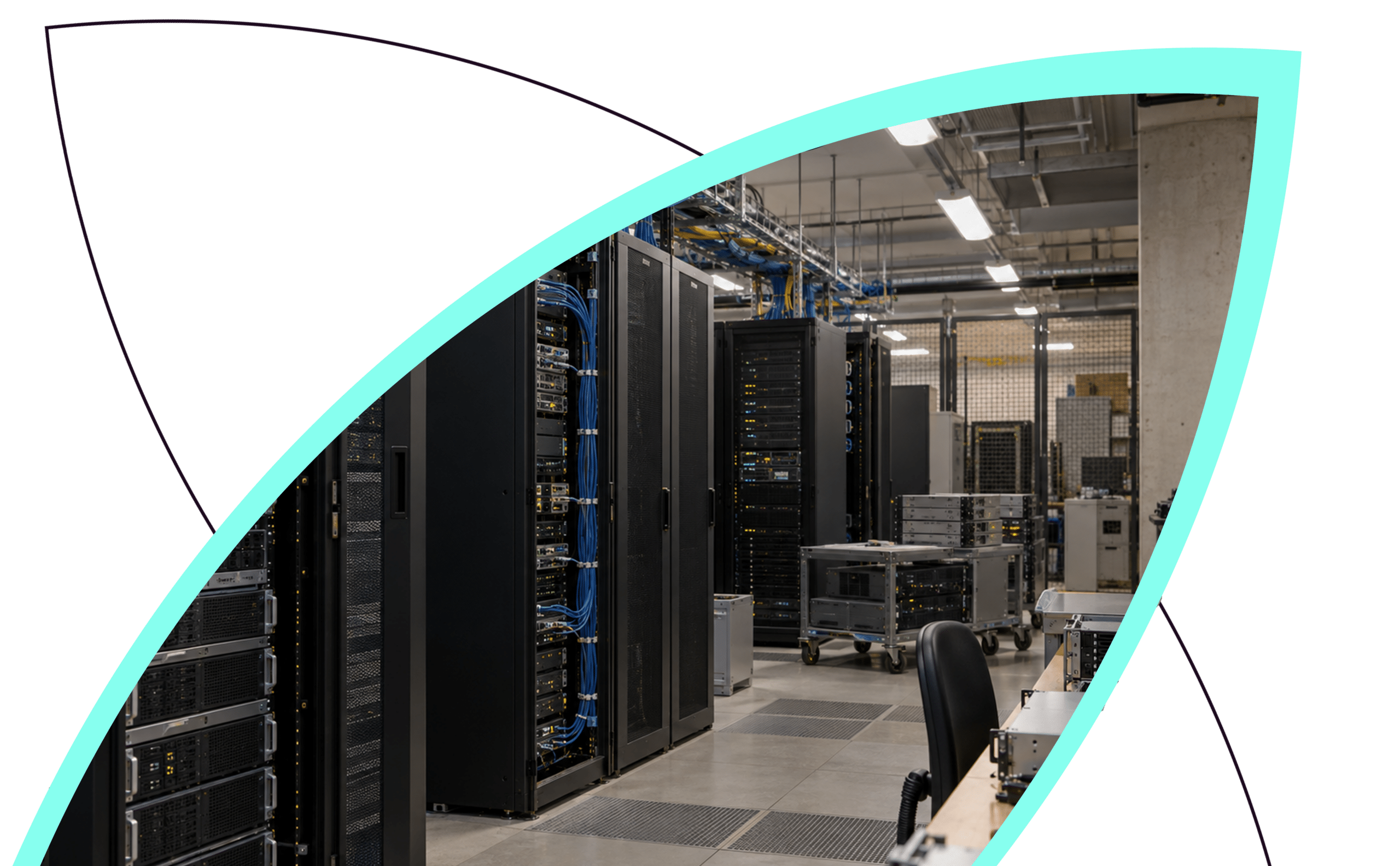 A small team of us explored whether we could build clusters using commodity hardware and open-source software, dramatically reducing cost while increasing performance.
This led to working with early cluster technologies, including tools such as Beowulf and xCAT for provisioning.
This was during the early days of Red Hat Linux distributions before the enterprise solutions.
These environments required a broad technical understanding:
- Node provisioning and imaging at scale
- Network design for distributed workloads
- Storage integration, including SAN environments
- Scheduling and workload management concepts
The challenge was not just building the cluster, it was keeping it consistent, stable, and operational as it scaled.
“The difference between a system that works once and one that works consistently is engineering discipline.”
Conclusion: foundations that still matter
This early phase of my career brought together electrical engineering, enterprise UNIX systems, and emerging HPC technologies.
More importantly, it established a way of thinking that still applies today.
Infrastructure is not just about selecting the right technology.
It is about designing systems that perform reliably under real-world conditions, where constraints, failures, and operational complexity are unavoidable.
Red Oak Perspective
At Red Oak Consulting, we see many organisations investing in HPC and AI platforms without fully addressing the underlying foundations.
Without alignment across infrastructure, operations, and delivery, even the most advanced systems struggle to deliver consistent value.
The key is end-to-end engineering, ensuring every layer of the system works together effectively.

Tez Gale
Lead Consultant
Red Oak Consulting